Lost in Translation: The Communication Breakdown That Keeps Data Insights from Driving Decisions
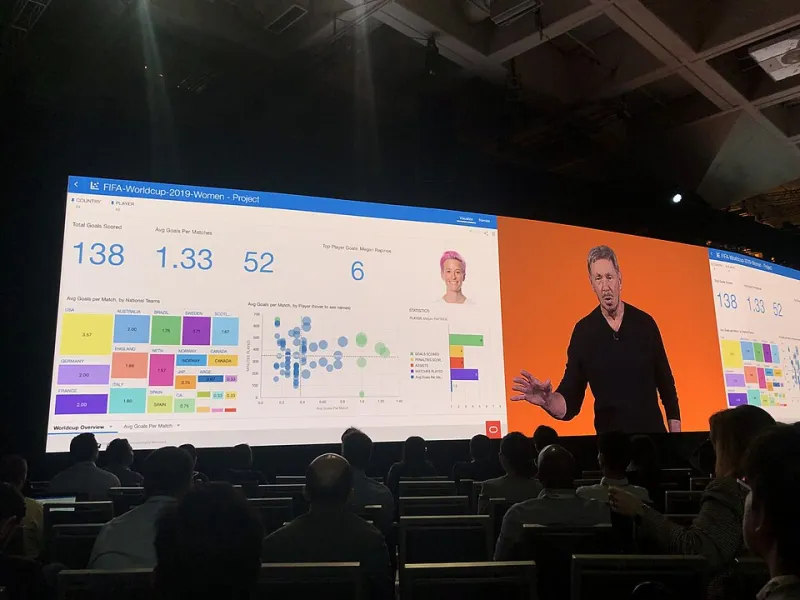
Photo: GeneralAB13, CC BY-SA 4.0, via Wikimedia Commons
American companies collectively spend hundreds of billions of dollars annually on data infrastructure, analytics platforms, and the technical talent to operate them. The implicit promise behind that investment is straightforward: better data leads to better decisions. Yet across industries, a stubborn and costly problem persists. The insights generated by data teams frequently fail to influence the decisions they were designed to inform. Not because the analysis is flawed. Not because leadership is indifferent. But because the two groups speak fundamentally different languages — and neither side has been given adequate tools to bridge the gap.
This is the data translation problem. And for most organizations, it is not a technical failure. It is a communication failure with technical roots.
Where the Signal Gets Lost
The breakdown typically occurs at a predictable point in the information chain. A data science team produces a rigorous analysis — complete with confidence intervals, model assumptions, and nuanced caveats — and packages it into a report or dashboard. That output then reaches an executive audience that is operating under time pressure, processing multiple competing priorities, and evaluating information through the lens of strategic consequence rather than statistical methodology.
The result is a mismatch that neither side fully perceives. Data teams often interpret a lack of action as evidence that leadership does not value analytics. Executives, meanwhile, frequently experience data presentations as technically impressive but strategically opaque — rich in detail, thin on implication. The question that every decision-maker needs answered — what should I do differently as a result of this? — goes unaddressed.
According to research from Gartner, fewer than half of analytics initiatives produce the business outcomes they were intended to support. The technology is rarely the limiting factor. The translation layer almost always is.
The Anatomy of a Communication Gap
Understanding why this gap persists requires examining the structural conditions that produce it.
Data professionals are trained to communicate with precision. Precision, in a technical context, means qualifying conclusions, surfacing uncertainty, and resisting overstatement. These are intellectual virtues. In an executive communication context, however, excessive qualification can obscure rather than illuminate. When every finding is accompanied by three layers of methodological caveat, the strategic signal becomes difficult to extract.
Executives, for their part, are trained to operate on incomplete information and move quickly. They need conclusions framed as decisions, not analyses framed as findings. When a data team presents a visualization without a recommended action, leadership is left to perform the translation work themselves — work they may lack the technical background to do accurately.
The gap, in other words, is structural. It will not close through goodwill alone.
Tools Narrowing the Divide
A new generation of platforms is beginning to address the translation problem at the interface level. Tools like ThoughtSpot and Narrative BI are designed to surface natural-language summaries of complex data outputs, reducing the interpretive burden on non-technical audiences. Rather than presenting a dashboard of charts requiring contextual expertise to read, these platforms generate plain-language narratives that lead with implication rather than methodology.
Similarly, AI-assisted analytics layers — now being integrated into enterprise platforms including Microsoft Fabric and Salesforce Einstein — are enabling data teams to generate executive-ready summaries automatically, with recommended actions embedded directly in the output. The underlying analysis retains its technical rigor, but the communication layer is optimized for the audience receiving it.
These tools represent meaningful progress. But technology alone does not resolve a problem rooted in organizational behavior and professional culture.
Practical Strategies for Data Teams
For data professionals seeking to improve their impact without waiting for platform-level solutions, several methodological shifts have demonstrated consistent results.
Lead with the decision, not the data. Every analysis should open with the strategic question it addresses and the recommended action it supports. The supporting evidence follows. This structure respects executive attention and ensures the most critical information survives even if the full report does not get read.
Translate uncertainty into risk framing. Confidence intervals and p-values carry little meaning for most executive audiences. Reframing statistical uncertainty as business risk — there is approximately a one-in-four chance this projection understates actual demand by 15 percent or more — makes the stakes legible without sacrificing accuracy.
Build a shared vocabulary deliberately. Data teams that invest time in understanding the specific metrics, terminology, and strategic priorities that matter to their executive stakeholders produce work that is structurally easier to act on. This is not simplification. It is alignment.
Prototype the decision, not just the analysis. Presenting a decision scenario — if we act on this finding, here are three likely outcomes and their respective probabilities — shifts the conversation from interpretation to choice. It positions the data team as a strategic partner rather than an analytical support function.
The Organizational Dimension
Beyond individual technique, closing the data translation gap requires structural investment at the organizational level. Companies including Capital One and Procter & Gamble have experimented with embedding data translators — professionals with both technical fluency and executive communication skills — within business units rather than centralizing them in analytics departments. This model accelerates the feedback loop between insight generation and strategic application.
Other organizations are addressing the gap from the other direction, investing in data literacy programs for senior leadership to raise the baseline level of analytical competency across the executive layer. Neither approach is sufficient on its own, but together they create the conditions for genuine translation to occur.
The Cost of Leaving It Unsolved
The data translation problem is not a peripheral concern. As AI-generated insights become faster, more voluminous, and more technically complex, the distance between what data systems can surface and what executives can act on will widen — unless organizations invest deliberately in closing it.
The companies that solve this problem first will not simply make better use of their existing analytics investments. They will compound that advantage over time, building decision-making infrastructure that converts information into action faster than competitors who are still waiting for their insights to get lost in translation.